Strange Songs of New York
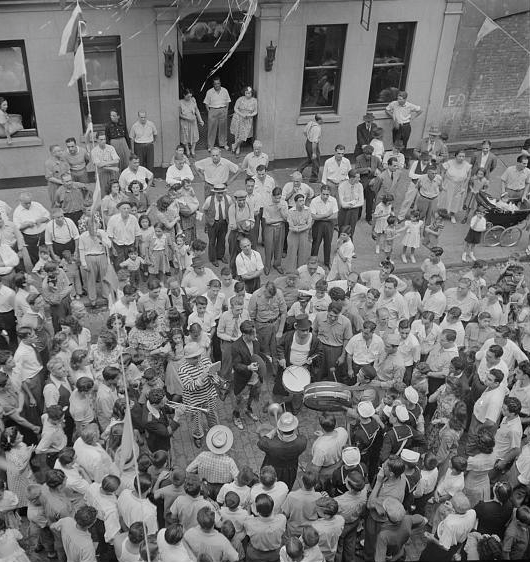
Dancing and music on Mott Street, New York. Library of Congress.
In this edition of Stories From the City, we turn to music, focusing on five songs tied to New York City through unusual histories and lesser-known biographical connections. Each selection traces a distinct link between a song and the city, from political activism and counterculture to early New Amsterdam life.
Bring On the Lucie (Freda Peeple) – John Lennon (1973)
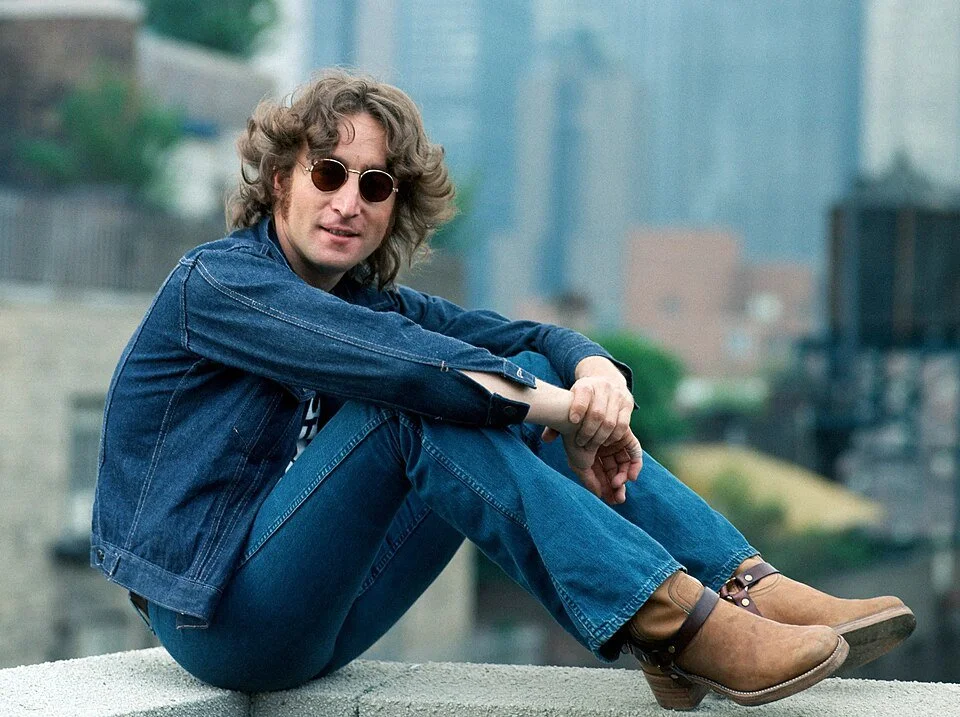
John Lennon, press photo, 1974. Photo by Bob Gruen.
We don't care what flag you're waving
We don't even want to know your name
We don't care where you're from or where you're going
All we know is that you came
Bring On the Lucie (Freda Peeple) was written during a very specific New York period, when John Lennon was under surveillance. During the early 1970s he was a frequent presence at the Record Plant in Midtown Manhattan, a popular artist-centered recording studio. It was here, in 1973, that Lennon recorded and mixed the track for Mind Games, at the height of his political activism and legal battle with U.S. authorities.
The song’s slogan-like refrain and direct attack on political leaders reveal a moment when his music and activism were closely monitored by federal agencies concerned about his influence on the antiwar movement and young voters. Lennon was fully aware of this scrutiny. From roughly 1971 to 1975, the FBI, the Immigration and Naturalization Service, and the Nixon administration tracked his speeches, lyrics, activism, and public appearances while simultaneously pursuing deportation based on a 1968 British marijuana conviction.
Lennon returned to the Record Plant in 1980. On December 8, he was at the studio working with Yoko Ono on her song Walking on Thin Ice. The session ended that evening, and Lennon left carrying the tape of the final mix. Later that night, he was shot and killed outside his home, the Dakota, by Mark Chapman.
Nature Boy – eden ahbez / popularized by Nat King Cole (1948)
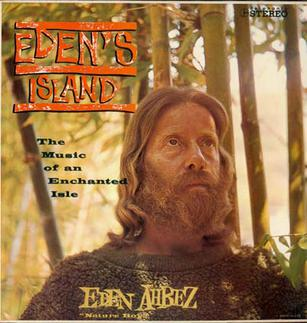
eden ahbez, songwriter of Nature Boy. Source: Wikimedia Commons.
There was a boy
A very strange, enchanted boy
They say he wandered very far
Very far, over land and sea
Few songs feel as otherworldly as Nature Boy, first made famous by Nat King Cole in 1948, yet its origins begin with a Brooklyn-born orphan, George Aberle, who spent his early childhood in a Jewish orphan asylum in New York before drifting west.
Rejecting clothes, convention, and even capital letters, he renamed himself eden ahbez and wrote the dreamy future No. 1 song while living in a cave near Palm Springs. A self-styled “Nature Boy” in the tradition of the late nineteenth and early twentieth century European Naturmenschen, meaning “nature-people” who rejected modern urban life in favor of simple living, ahbez was a raw food-eating nudist and a blueprint for the hippie movement.
When Cole finally tracked down the elusive songwriter to secure permission to record it, ahbez had largely vanished from the music industry’s orbit and was eventually discovered living beneath the Hollywood Sign. In early 1948, RKO Radio Pictures paid ahbez $10,000 for the rights to Nature Boy and used it as the theme for The Boy with Green Hair, crediting him as the composer in the film’s opening titles.
Strange Fruit – Abel Meeropol / popularized by Billie Holiday (1939)
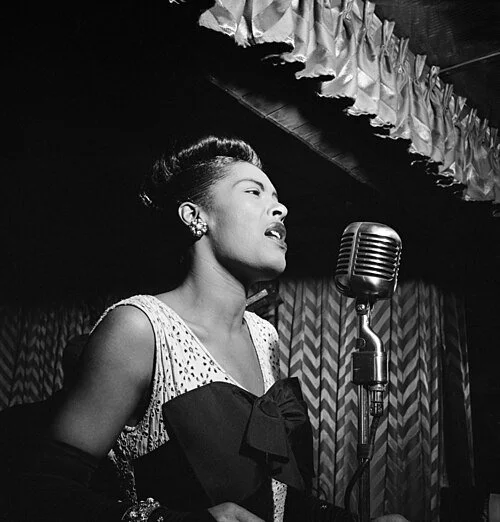
Billie Holiday at the Downbeat club, New York City, circa 1947. Wikimedia Commons.
Southern trees bear a strange fruit,
Blood on the leaves and blood at the root,
Black body swinging in the Southern breeze,
Strange fruit hanging from the poplar tree
Strange Fruit is often treated as inseparable from Billie Holiday, whose rendition made it iconic, but its origin story is intensely New York. Abel Meeropol, born in 1903 to Jewish Ukrainian immigrants, was an English teacher who spent years at DeWitt Clinton High School in the Bronx, publishing work under the pseudonym Lewis Allan. After seeing a photograph of a 1930 lynching, he wrote a protest poem that appeared in 1937 in The New York Teacher under the title Bitter Fruit, then set his own words to music. Before Holiday ever recorded it, Meeropol and his wife Anne Shaffer performed the song around New York in the late 1930s, including at Madison Square Garden.
Years later, attentive to the plight of Julius and Ethel Rosenberg, the New York couple convicted of passing atomic secrets to the Soviet Union during the Cold War and executed for espionage in 1953 at Sing Sing, he and his wife adopted their two young sons, Michael and Robert, who then took the Meeropol surname.
Both Michael and Robert appear in the 2019 HBO documentary Bully. Coward. Victim. The Story of Roy Cohn, about the prosecutor who pushed for the Rosenbergs’ death sentence at the height of the McCarthy era, directed by Michael’s daughter, Ivy Meeropol.
Kill Your Sons – Lou Reed (1974)
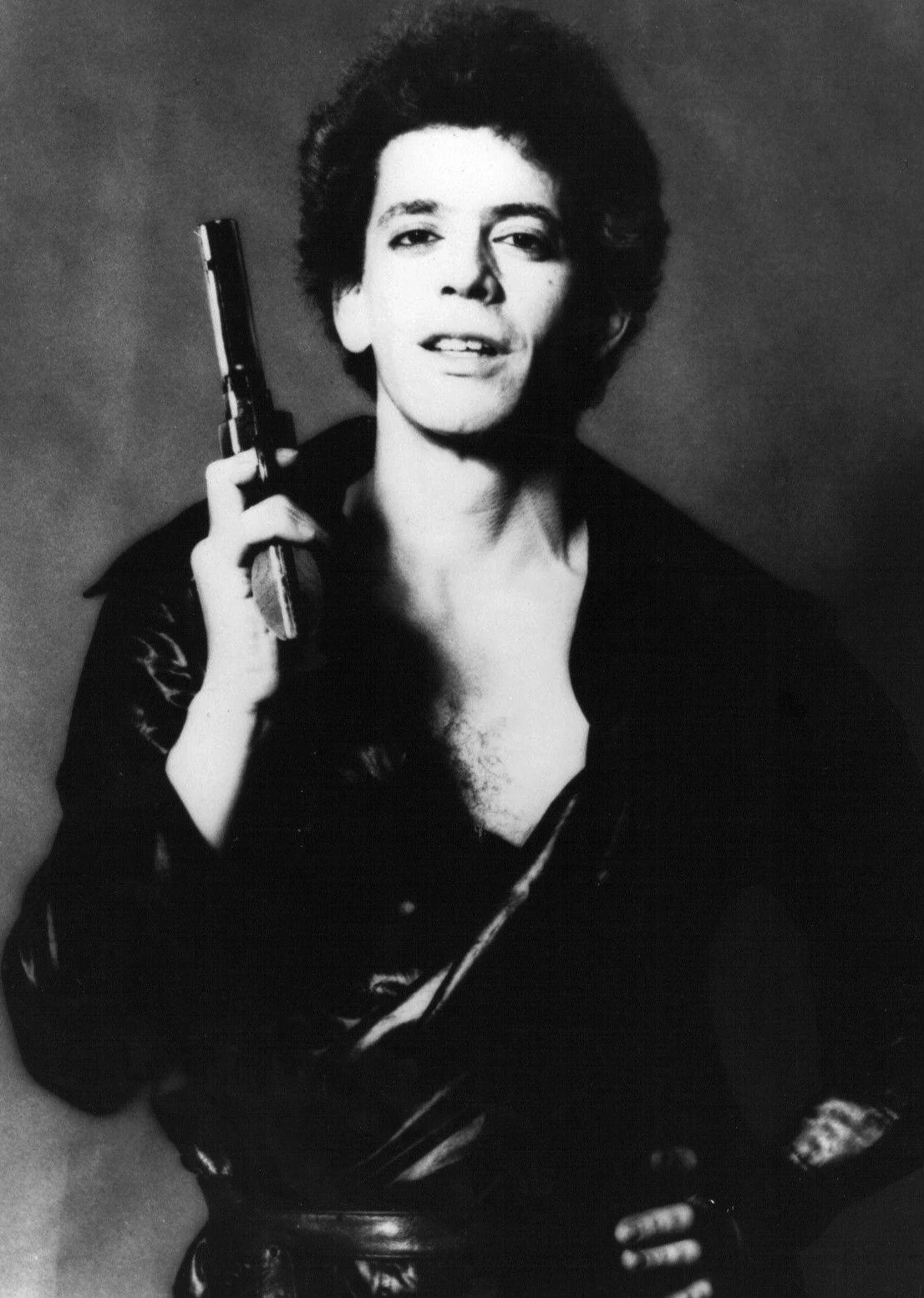
Lou Reed, 1977. Photo by Mick Rock, via Wikimedia Commons.
All your two-bit psychiatrists are giving you electric shock
They say, they let you live at home, with mom and dad
Instead of mental hospitals
Kill Your Sons, released on Lou Reed’s 1974 album Sally Can’t Dance, is rooted in a deeply personal New York story. Reed was born in Brooklyn in 1942 and grew up on Long Island, and his early return to the city came under difficult circumstances. In 1959, after a mental breakdown during his first year of college, his parents consented, on medical advice, to electroconvulsive therapy at Creedmoor Psychiatric Center in Queens. Reed later described the treatment as traumatic and linked it to memory loss and a lasting distrust of authority. He would not address the experience directly for years, but Kill Your Sons opens with a blunt reference to electroshock and psychiatrists.
After treatment and follow-up care at the Payne Whitney Psychiatric Clinic in Manhattan, Reed went on to form the Velvet Underground, an experimental band deeply immersed in New York City’s subcultures.
In January 1966, the band performed at the Delmonico Hotel for the New York Society for Clinical Psychiatry as part of Andy Warhol’s Exploding Plastic Inevitable, delivering a deliberately provocative multimedia set to an audience of psychiatrists. Bandmate John Cale later framed the event as an ironic confrontation, given Reed’s earlier institutionalization.
Trip a Trop a Tronjes – Traditional Dutch lullaby of early New Amsterdam
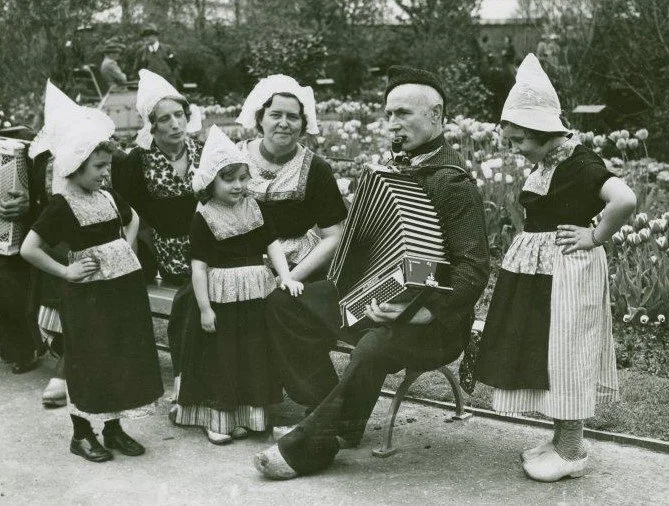
Dutch folk dancers in costume with accordion player, Gardens on Parade, New York World’s Fair, 1939–1940. New York Public Library Digital Collections.
Trip a trop a tronjes,
Up and down and over,
The pigs are in the bean patch,
The cows are in the clover.
Trip a Trop a Tronjes is a Dutch rhyme lullaby tied directly to the earliest households ofNew Amsterdam. Seventeenth-century accounts of domestic life along the Hudson describe Dutch children being soothed to sleep with old-country songs carried across the Atlantic by settlers. In English, the rhyme is usually understood as a rhythmic knee-bouncing verse that ends with a playful gesture about how big the child has grown, which made it easy to adapt across languages as Dutch gradually gave way toEnglishin early New York homes.
Theodore Roosevelt, who grew up in a Dutch-influenced New York family in the nineteenth century, later recalled that his grandmother passed down the rhyme to him in oral form, preserving a trace of thelanguage long after Dutch had faded from everyday use. He remembered it well into adulthood and referenced it during his travels abroad:
“… when I was in East Africa it proved a bond of union between me and the Boer settlers, not a few of whom knew it, although at first they always had difficulty in understanding my pronunciation, at which I do not wonder.”
Long before protest songs or avant-garde lyrics, the city’s earliest soundtrack included domestic rhymes like Trip a Trop a Tronjes, carried across the Atlantic and preserved in family life even as New Amsterdam was renamed, anglicized, and transformed into modernNew York.